


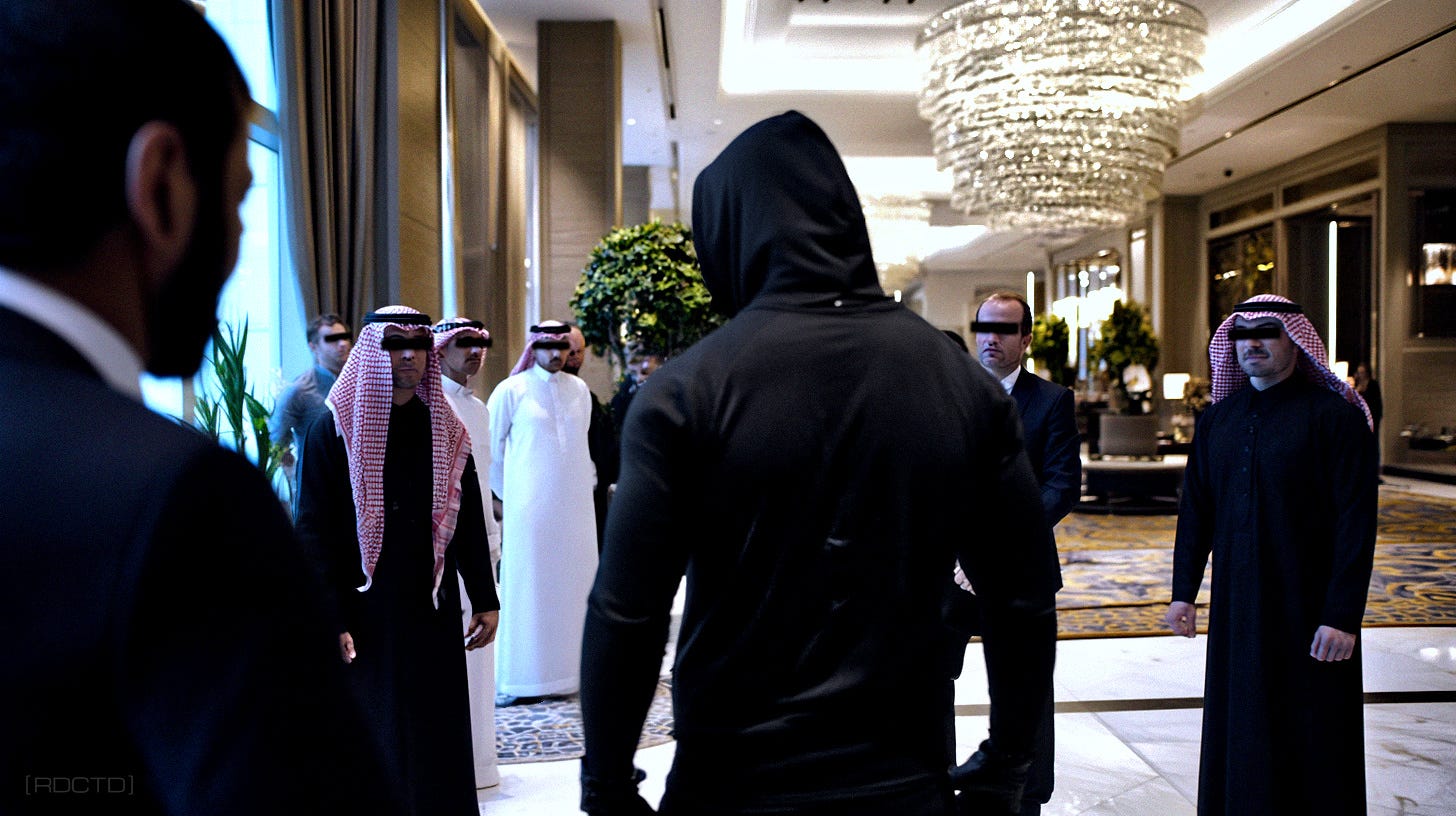
A trained state you switch on before, or at the first sign of, an intimidation attempt - a controlled hardening sequence that makes someone’s attempt to dominate you to fail.
The strongest counter to intimidation is composure with a boundary and the strongest boundary is a steady baseline.
The Counter-Intimidation Mode is the trained ability to absorb coercive pressure and hostile interpersonal moves by holding composure, control, and a firm boundary when someone tests you. Acting tough has nothing to do with it. What you’re running is a deliberate change in posture, gaze, voice, and internal physiology that tells the aggressor you can’t be rattled.
You’re managing two things at once: the signals you project outward, and the way your nervous system behaves underneath. Handle both well and an aggressor loses their hooks. They can’t catch you with fear, urgency, or status pressure. You end up hard to read, rush, and push around - without escalating anything.
Pace Disruption // Put a micro-delay in front of every answer. A half-count of silence, then speak. That gap keeps you out of reactive turn-taking and signals deliberation, which jams the interrupt-and-steer rhythm aggressive people rely on.
ACTIVATION
The switch fires on any pattern that tends to come right before coercion. Crowding your space. Blocking your path at an angle. Forced choices. Rapid questions stacked on top of each other. Mocking. “Who do you think you are.” Attempts to peel you away from the people you came with.
Read these as pre-incident indicators (don’t ignore as just bad attitude) and assume the next move aims to constrain your time, space, or your ability to decide. Tag the pattern early. The sooner you label it a control attempt, the less power it has over your tempo. Once you spot it, run a quick internal check - feet, breath, hands, eyes, voice, distance.
You’re catching your own micro-reactions before they reach your face or your cadence. Think of it as managing your own tells while you gather information and keep the decision in your hands. You’re moving from social mode into assessment mode - which means no more feeding rapport but time for managing access, pace, and angles.
Speed matters here, but drama doesn’t have a place here. Don’t announce the change. Don’t posture, let your body and your voice settle onto a stable baseline that reads as comfort with friction and live attention to detail.
Question Inversion // Hit with an accusation, answer it with a calibrated clarifying question - “What are you actually trying to get out of this right now?” That flips a dominance move back onto the other person and puts the burden on them to explain themselves. It also tends to surface their real intent.
BASELINE
Start with physiology. Intimidation works best when it can spike your nervous system and drag you into a rushed, reactive tempo. So you take your own baseline first. Hold the interior steady and the exterior stays steady, and your choices stay yours.
Breath
Drop your breathing low and slow. Quiet nasal inhale, longer controlled exhale. The extended exhale is the lever. Lengthening it raises vagal tone and pulls your heart rate down, which keeps your voice from going thin and buys you a beat of clear thinking. It also stops you from unconsciously matching their pace.
Jaw and tongue
Set your jaw neutral. Let your tongue rest on the floor of your mouth. This cuts facial tension, keeps micro-tremors out of your speech, and protects clean diction under pressure. A clenched jaw reads as fear or as a wind-up to escalation, so you want it gone.
Hands
Keep your hands visible and still, somewhere around midline - beltline to sternum. Still hands read as control. Visible hands lower how volatile the moment feels to everyone watching. Fidgeting, face-touching, and pocketed hands advertise uncertainty and can spike threat perception in whoever’s testing you.
Stance
Anchor your feet about shoulder width, one slightly back, knees soft. This isn’t a fighting stance, think of it as a “stability” stance that makes you physically hard to move, bump, crowd, or rush. You’re setting up quiet mobility so you can angle off, pivot, or step without it looking like a retreat.
Lock these in and the message travels both directions. Inward, you’re telling your own body you’re not trapped and you’re in no hurry. Outward, you’re showing a controlled baseline that makes intimidation feel slow, uncertain, and not worth the effort.
Boundary With Options // When you have to set a constraint, hand over two acceptable paths - “We can handle it now, or we can set a time for it.” Options protect the other person’s autonomy and stop them from painting you as the one refusing to cooperate.
OPTICS
Now shape the exterior. Intimidation is partly a perception contest. Posture, gaze, and facial expression are the surface the other person reads to decide whether their tactics are landing.
Aim to look present and deliberate. Aggression and overconfidence both work against you. You want a baseline that gives dominance attempts nothing to feed on - no flinch, no rushed explanation, no acceleration.
Posture
Square your chest enough to look engaged and grounded, shoulders down, weight even. Skip the hard-bladed combat profile unless a real safety angle calls for it. Overt fighting geometry reads as escalation and can pull a performance out of them. Hold a professional stance instead - balanced, mobile, hard to crowd without forcing you backward.
Gaze
Eye contact steady, never locked. Use a scan-and-return rhythm. Brief checks to their hands, the exits, their companions, then back to their face. You stay off the visual hook and keep a live read on their intent and your own options. It should read as calm control.
Facial affect
Run a calm face. Neutral brow, slow blink, maybe a slight head tilt like you’re weighing a claim. Smiles, grimaces, and exaggerated skepticism are all emotional tells that hand them traction. Keep the expression low and controlled. It says you’re neither impressed nor moved.
Distance management
Manage distance with micro-steps and angles (avoid big retreats. and advances). If they crowd you, hold your ground and reset your space by stepping off-line and re-planting your feet. That forces them to follow if they wants to keep pressing - the follow exposes their intent to anyone watching while it breaks their momentum. Now they’re the one visibly advancing.
Put these together and you won’t be viewed as a target. You’re not threatening anyone or handing over access to your reactions. That’s tradecraft applied to a hostile room - tighten the optics, control the tempo, say almost nothing.
Cognitive Labeling // In your head, name their behavior by category - “status test,” “time-compression,” “false binary.” Labeling keeps your thinking online and stops you from arguing inside the frame they built for you.
CADENCE
Your voice controls flow, status, and emotional contagion - which makes it the tool that turns intimidation back on the person using it. Fewer words, slower. Let your sentences drop at the end so they land as decisions rather than requests.
Hold volume moderate, loud reads as emotional. Quiet reads as confident when it’s backed by breath and clean articulation. Aim for a flat, measured delivery, slightly detached, like you’re documenting the moment rather than reacting to it.
Use plain operational phrasing - short, factual, boundary-setting, built on verbs that stop motion and reset the rules. “Stop there.” “Say it plainly.” “That doesn’t work on me.” “We’re done with threats.”
Leave out insults, profanity, and over-explaining. Those are bids for approval and fuel for the game. They also hand them material to twist later.
When they rapid-fire questions, refuse their pace. Speed control is half the play. Pick one question, answer it once, then stop. The pause is a signal - it costs them energy to re-engage while your baseline never moves.
Silence does a lot of work in this mode. Held long enough, it often pulls their real objective into the open.
Frame Refusal Language // Reach for process language over emotion language. “That’s not a workable approach” beats “You’re being aggressive.” Process language denies them the moral high ground and makes any escalation look procedural and small.
FINAL
Keep the mode professional by pairing it with sound risk management and a real de-escalation option. The goal should never be to win an ego contest, it’s to block manipulation while you keep your freedom to act. If there’s a clean exit, take it early - dominance displays tend to collapse the moment you refuse the stage. If you’re stuck staying, hold your boundaries consistent, tone flat, and posture grounded.
When it’s over, downshift on purpose - long exhale, drop the shoulders, unclench the jaw. Don’t carry the stress into the rest of your day.
The more emotional they get, the more procedural you become.


This is why Mike from Breaking Bad is probably the best character in both series. Thank you for posting!
This was just the level of detail to keep it simple to remember and review. Ty