


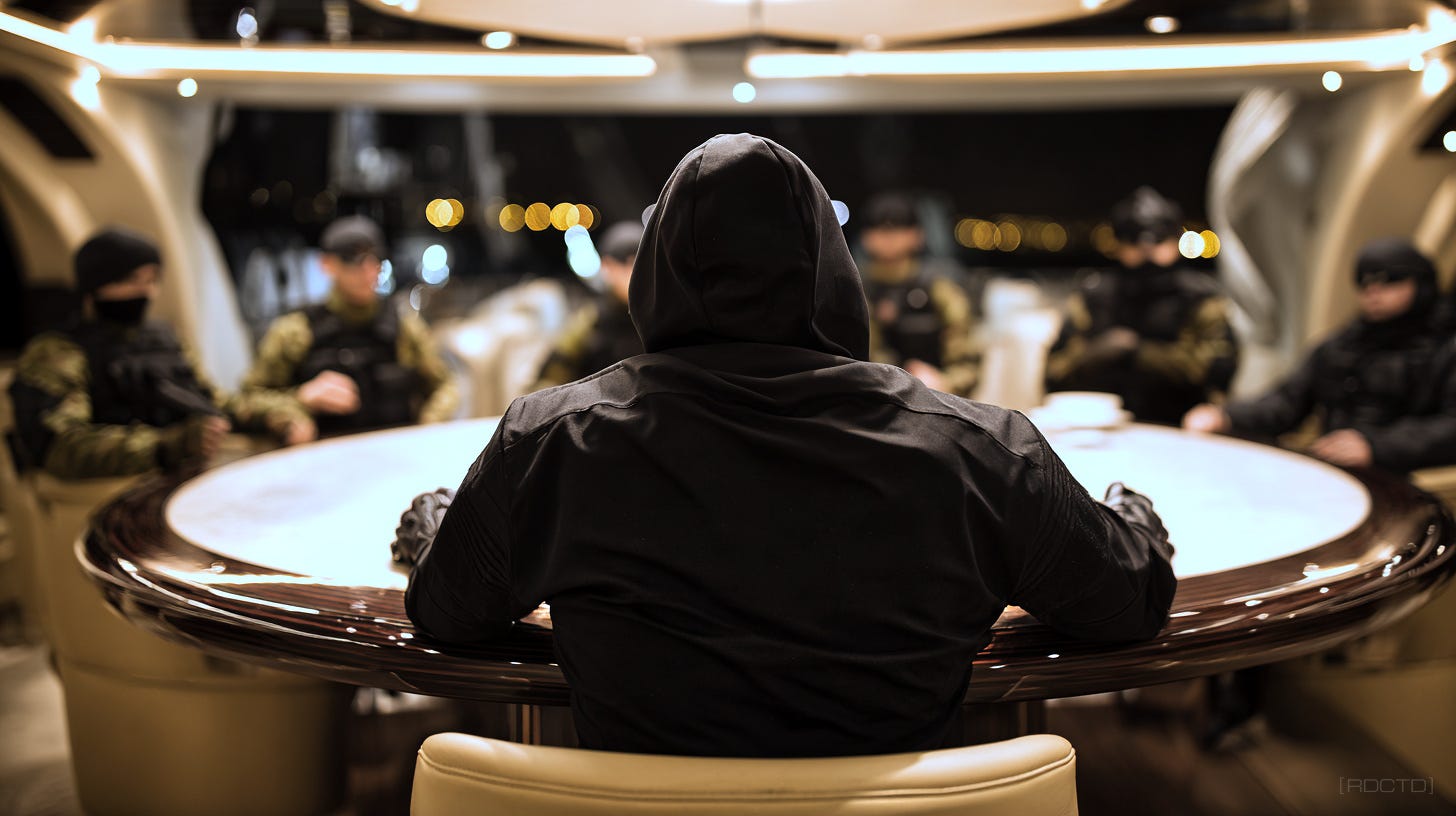
This guide is written for civilians, but it’s informed by how loyalty is built in clandestine units where failure gets people exposed or killed. The context is different. The mechanics are the same.
Loyalty is not charisma. It’s not fear. It’s not incentives. In the field, loyalty is a byproduct of behavior observed under pressure, over time. Under real pressure, loyalty shows up as behavior before it ever shows up as words.
Below is how covert operatives cultivate loyalty, translated for civilian teams, companies, families, and informal groups. What follows strips away mythology and adapts field-tested leadership behavior for everyday environments. These principles were forged where trust failure has immediate consequences, not performance reviews. Apply these methods and you’ll see why loyalty, once earned this way, becomes stable and self-reinforcing.
Leadership is the removal of doubt, not the assertion of authority.
Establish a Personal Code Before You Need One
In the field, authority alone never carries a team. What people follow is predictability when conditions degrade. A personal code is not branding or values language. It’s a set of non-negotiable rules you adhere to when adherence costs you time, comfort, or advantage.
People rarely comment on this, but they track it relentlessly.
For civilians, this translates into behavior that doesn’t shift based on audience or convenience. Keep your word when it creates friction. Take responsibility in public and correct in private. Hold the same standards whether doing so helps or hurts you.
People don’t align with what you claim to value. They align with what you prove, repeatedly, when it would be easier to take the exit.
The strongest teams self-correct because they trust intent, not supervision.
Learn What Actually Drives the People Around You
Misunderstanding motivation is how teams fracture under stress. Operatives are trained to read what moves people when comfort is removed, not how they describe themselves in calm conditions.
Titles, personality labels, and stated values collapse quickly when outcomes start to matter. What remains is the driver that’s always been there.
Operatives categorize motivation into a small number of reliable drivers because, under pressure, complexity disappears. These drivers determine who steps forward, who hesitates, and who quietly disengages.
Duty and Honor
Some people are governed by an internal code rather than external reward. They respond to standards, responsibility, and being trusted with something that matters. When they believe leadership violates its own rules, loyalty breaks cleanly and does not return.
Safety and Stability
Others are motivated by protection of themselves, their family, or their position. They stay loyal to leaders who reduce uncertainty and avoid unnecessary risk. When chaos feels unmanaged, these individuals disengage or seek cover elsewhere.
Belonging and Recognition
Some people need to feel included and seen as part of the group. They give disproportionate effort when their presence and contribution are acknowledged. When ignored or sidelined, they detach emotionally long before they leave physically.
Purpose and Meaning
Purpose-driven individuals want to know that their effort connects to something larger than personal gain. They tolerate hardship well when the mission feels real and necessary. When work feels hollow or misaligned, motivation collapses regardless of compensation.
For civilians, the mistake is assuming money is the universal lever. Watch who volunteers effort without prompting, who defends the work when it is criticized, and who remains steady when conditions worsen. Complaints are often noise. Defense reveals commitment.
When stress hits, people default to their primary driver automatically. Leaders who understand this don’t need constant oversight or control. They place people where motivation and responsibility naturally align, and the system runs with far less friction
When people stop protecting themselves around you, performance accelerates.
Protect Your People Before You Protect Your Image
In hostile environments, leaders are evaluated less by intent and more by where they stand when things go wrong. Teams quickly identify whether a leader treats people as assets to be defended or liabilities to be managed.
Those who sacrifice subordinates to preserve optics, rank, or reputation lose authority fast. Not emotionally. Structurally.
Protection is not softness and it’s not sentiment. It’s a calculated investment in cohesion and operational trust. When people believe you’ll take the first hit, they stop wasting energy on self-protection and redirect it toward performance.
For civilians, this shows up in specific behaviors that’s visible and remembered. Absorb blame upward when mistakes are honest and effort was real. This signals that accountability has a ceiling and that you occupy it.
Shield reputations in public settings, especially when pressure or scrutiny is high. Public exposure teaches people to hide problems instead of solving them.
Address failures in private, with clarity and restraint, once emotions have cooled and facts are clear. Correction works best when dignity is preserved.
The moment someone believes you’ll expose them to protect yourself, loyalty collapses. Not gradually. Permanently. Once that conclusion is reached, every action afterward is filtered through self-interest, and the team never fully recovers.
Respect is built in silence. Loyalty is built in inconvenience.
Recognize Contribution Without Making It Performative
In covert units, recognition is never loud and never casual. Praise is treated like a precision tool, not a morale crutch. When everything is high risk and low visibility, empty affirmation is worse than silence. People can tell immediately when recognition is real versus decorative.
