


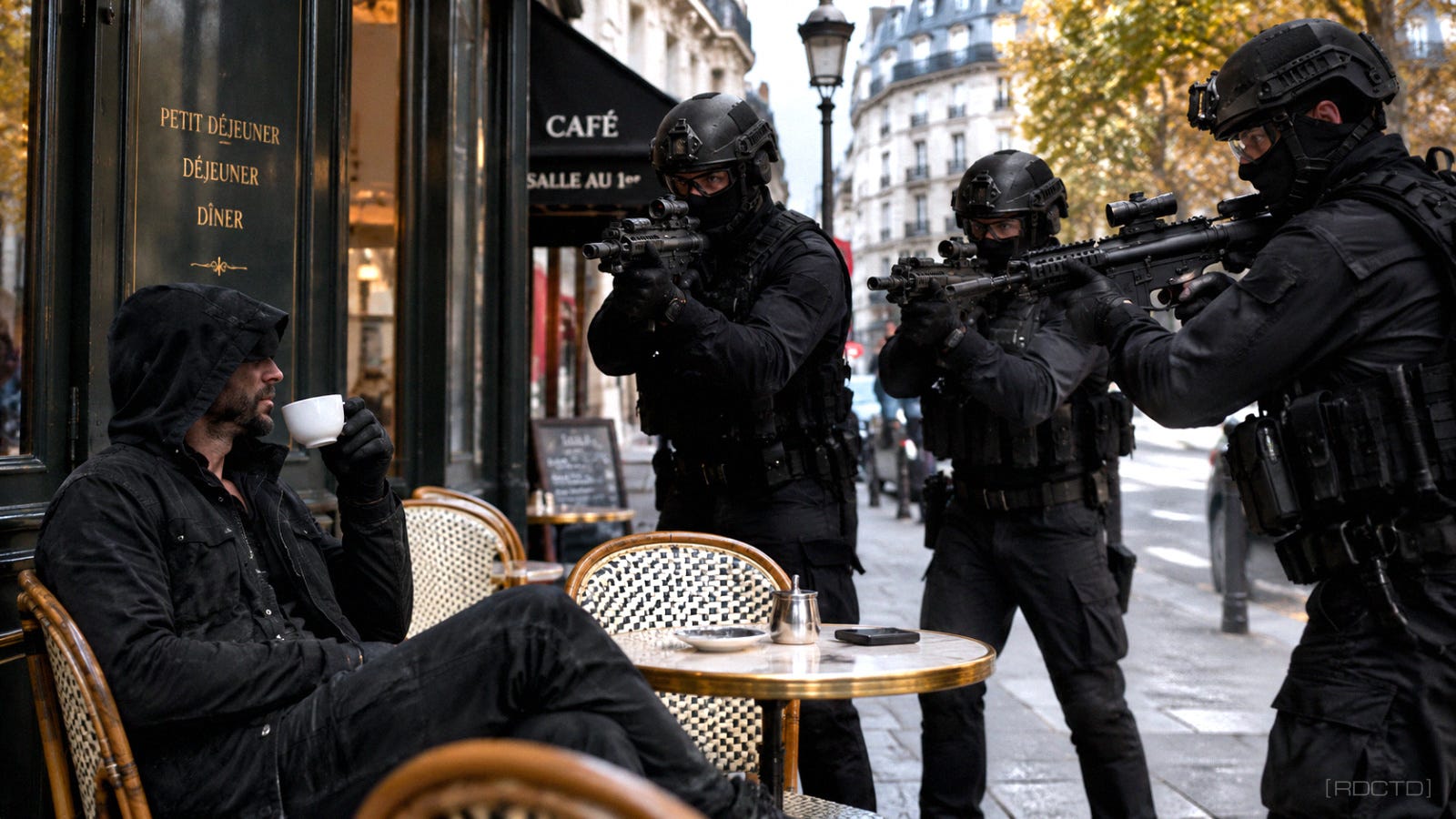
Use calm as a tactical advantage, helping you make sharper decisions and retain initiative while others let emotion dictate their next move.
An unexpected event can compromise your next decision when you react before assessing it.
A setback makes you rush into action or a sudden complication pushes you to defend a plan you should be reassessing. The pressure starts directing your behavior before you’ve established what the situation actually requires.
The person who can provoke your reaction gains influence over your next decision.
They apply pressure, and you start explaining, they question your competence, and you defend a position you should be checking. Their aggression changes your behavior before you’ve decided whether it deserves a response.
Calm reduces that access.
In tradecraft, emotional regulation protects an operative’s ability to assess circumstances and act deliberately under stress. Its value extends beyond appearing composed, it preserves capabilities that agitation can interfere with.
That creates an asymmetric advantage. Two people can face the same difficult exchange while retaining very different capacities to handle it. Someone consumed by anger may become committed to an argument that’s already failing. Someone who remains composed has a better chance of noticing the failure and changing their approach.
For civilians, this advantage applies wherever pressure affects judgment: negotiations, workplace conflict, personal disputes, and unexpected problems.
Calm becomes an instrument of superior decision-making because it keeps more of your judgment available when you need it.
Let them see the mask of perfect peace, but not the cold arithmetic adjusting behind your eyes. Your face is the only cover that matters when the violence starts.
You Retain The Capacity to Assess
A difficult situation demands attention, your emotional reaction can become another demand competing for it.
While someone’s explaining a problem, you’re preparing a defense. While new information arrives, you’re replaying the insult that preceded it. You hear enough to react and miss the detail that should change your decision.
Composure helps you remain available to the actual situation.
You can recognize that a criticism contains valid information even when its delivery is hostile. You can acknowledge an error before defending it creates further consequences. You can revise a plan without treating the revision as a personal defeat.
That flexibility is essential. An operative needs to recognize when circumstances have changed and act on the updated picture. Becoming emotionally committed to the original assessment makes correction harder.
The civilian equivalent is: you can abandon a bad position before it becomes an costly commitment.
Calm supports this process. Accurate information and sound reasoning still have to do their part. A composed person can be wrong - retaining the capacity to examine that possibility is one of the advantages.
Composure becomes a philosophy when it governs your conduct even where nobody’s watching. Tradecraft gives that philosophy practical consequences.
Provocation Becomes Less Effective
Provocation works when it produces a useful response for the person applying it.
An insult gets you arguing, a challenge gets you disclosing information, manufactured urgency gets you agreeing before you’ve examined the terms.
Once that pattern becomes reliable, other people can use it against you.
Emotional regulation makes your response less automatic. You can register an insult and continue addressing the relevant issue. You can recognize pressure without accepting its implied deadline. You can hear an accusation without immediately volunteering a complete defense.
This is a practical form of resistance. Someone attempting to steer your behavior has fewer predictable reactions to work with.
Your anger may be justified. Keep the decision about how to use it in your own hands.
In a negotiation, that’s returning to the actual terms after a personal remark. At work, it’s documenting a demand instead of arguing about the person making it. In a relationship, it’s addressing a broken agreement while keeping the conversation focused on what needs to change. Each response keeps your conduct tied to a purpose you’ve chosen.
The advantage comes from making pressure less reliable as a way to direct you.
The need to end discomfort can make a bad decision feel like progress.
You Gain Control Over Timing
Agitation can make an immediate response feel compulsory.
You want to settle the accusation, remove the uncertainty, or prove that you’re capable. That urgency can push you into a commitment before you’ve established what’s required.
Calm gives you greater freedom to use the time available.
You can pause to verify a detail. You can let an offer remain unanswered while you assess it. You can end an unproductive exchange and return when the relevant information is available.
Timing is a tactical consideration because decisions become harder to reverse once you’ve acted on them.
An operative benefits from recognizing the point at which observation needs to become action. Civilian decisions have the same requirement - some demand an immediate response, others improve with another hour of checking.
Composure helps you distinguish between those conditions.
It also supports decisive action once the situation is clear. You spend less effort negotiating with your discomfort and more attention on the action the circumstances require.
Calm allows an unpleasant moment to end without making it a verdict on your life.
You Can Observe More Than You Disclose
Pressure often produces unnecessary speech.
People explain beyond the question, make promises to relieve tension, or disclose private details while trying to justify themselves. They can leave an exchange having revealed considerably more than they intended.
Calm makes deliberate disclosure easier.
You can answer the relevant question and stop. You can state uncertainty accurately. You can keep private information outside a conversation that has no legitimate need for it.
That’s a civilian application of operational security, or OPSEC: retaining control over information that could affect your position.
At the same time, composure leaves you better placed to listen. You can notice changes in what someone’s requesting, distinguish a fact from an assertion, and recognize when their explanation fails to answer the question.
Those observations give you material to assess. Nervousness alone proves little about someone’s intentions. What matters is whether their claims and conduct withstand examination.
The asymmetry develops when another person is pressing for an immediate response while you’re still collecting the information needed to judge their request.
You have more to work with before committing yourself.
We become easier to control when we believe every discomfort must be resolved immediately.
Your Options Survive The Pressure
An impulsive response can remove choices you’ll need later.
A threat makes a working relationship harder to recover, an angry message becomes a permanent record, a rushed agreement creates obligations that outlast the discomfort that produced it.
Composure helps preserve room to act.
You can make a firm refusal without adding an insult. You can correct someone without making their humiliation part of the exchange. You can leave a dispute unresolved long enough to obtain information that could settle it.
In operational terms, this preserves freedom of action: the ability to choose among workable responses as circumstances develop.
That freedom is valuable because your first assessment may be incomplete. You may need cooperation from someone you currently dislike. New evidence may justify changing your position. A problem that looks confrontational may have a practical resolution you haven’t identified yet.
Keep those possibilities available until there’s a reason to close them.
Calm also supports a clean exit. When an interaction becomes threatening or persistently abusive, you can act on that condition without remaining to defend your pride. Leaving and seeking help can preserve the options that continued confrontation would put at risk.
Remaining calm requires accepting that uncertainty may outlast your patience.
Your Authority Becomes More Credible
People need usable information from someone handling a difficult situation.
They need to understand what’s happened, what requires attention, and what action follows. Agitation can make those answers harder to deliver clearly.
Composure supports authority through accuracy and consistency.
You can explain a decision without repeatedly changing its justification. You can acknowledge an unknown without inventing certainty. You can state a boundary and follow through on it.
Those behaviors give other people something dependable to work with.
For a civilian, operational dominance means holding a stronger position within the situation: you understand the relevant facts, retain viable alternatives, and can carry out your decisions. Calm helps sustain that position under pressure.
Its usefulness becomes particularly clear when you have responsibility for others. During a project failure or a tense family situation, your response affects how much additional confusion everyone has to manage.
A clear instruction can help someone act, a concise acknowledgment of an error can let the correction begin.
Authority gains substance when your conduct continues to make the situation more manageable.
A decision made to display control can leave you with less of it.
Your Existing Skills Remain Available
Pressure can interfere with abilities you already possess.
You know how to explain the problem, yet start arguing about blame. You know which detail needs checking, yet make an assumption because you feel rushed. You understand the procedure and skip it to demonstrate confidence.
Calm helps you use what you know.
That’s an important part of the operative mindset. Preparation has value when you can still apply it during an uncomfortable encounter. Emotional regulation supports access to that preparation.
In civilian life, the result might be a more accurate negotiation, a necessary boundary maintained, or a serious mistake corrected before further work compounds it.
These outcomes are concrete. They matter more than whether you looked completely untroubled.
“Always be calm” is a working standard for retaining usable judgment. Fear and anger will sometimes remain present throughout the decision.
The advantage is the capacity to assess the situation and act effectively while they’re present. When pressure disrupts another person’s judgment and yours remains available, the conditions have become unequal.
That’s where emotional regulation becomes tactical advantage: you retain the ability to choose a response while the situation is still developing.
In the moment before death, everyone reveals their true religion. Make sure yours is composure, it’s the only sacrament that might rewrite the ending.
